
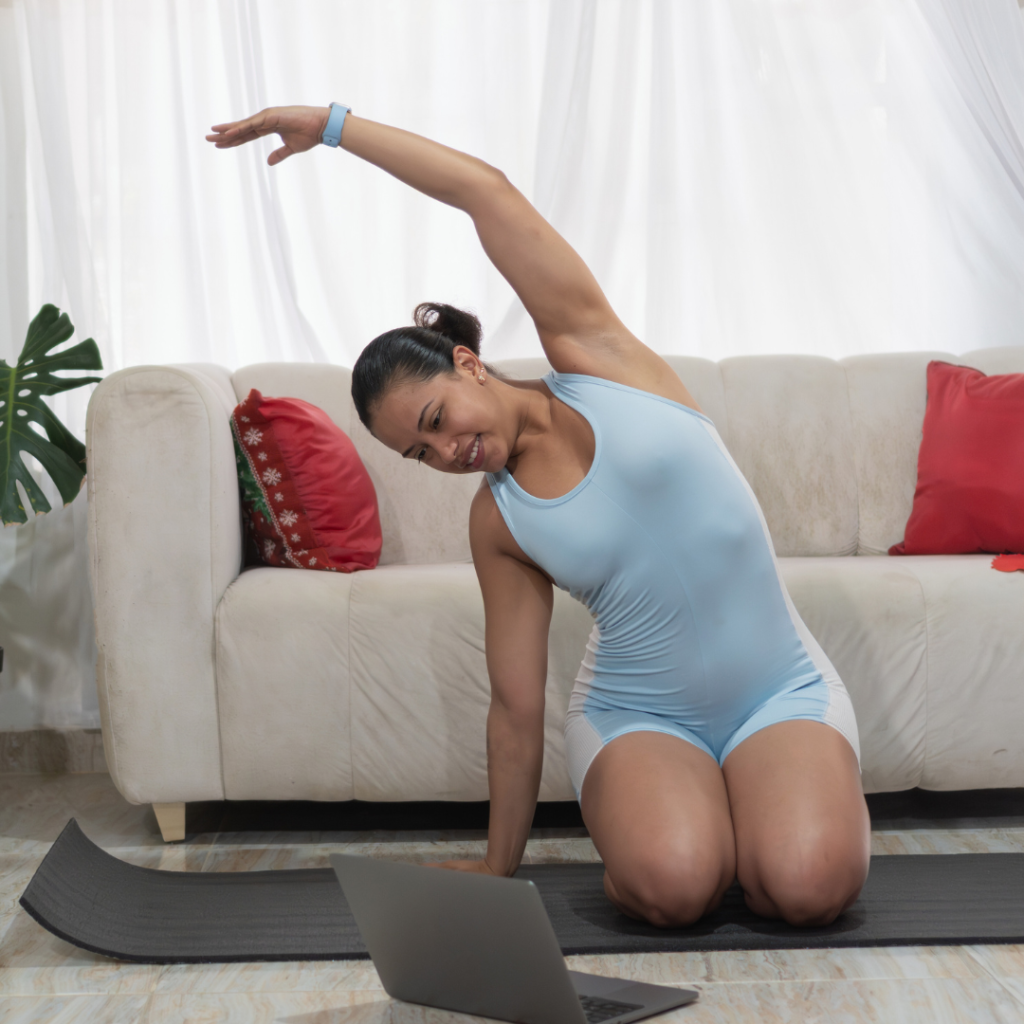
Starting a HIIT workout at home doesn’t require equipment or a lot of space. High-Intensity Interval Training (HIIT) uses short bursts of intense exercise followed by rest, making it efficient for beginners to improve fitness quickly. Beginner HIIT workouts at home focus on simple moves that boost your heart rate while being easy to follow.
These workouts can be adapted to different fitness levels and schedules, allowing anyone to start without feeling overwhelmed. With clear guidance, you can build strength and endurance safely at your own pace.
Understanding basic exercises and timing will help you get the most from your sessions. This article provides straightforward tips and examples to make your entry into home HIIT both effective and manageable.
What is HIIT for Beginners?
HIIT, or High-Intensity Interval Training, is a workout style that mixes short bursts of intense exercise with rest or low-intensity periods. Understanding the basics, what sets it apart from traditional cardio, and its home exercise benefits can help beginners get started safely and effectively.
Key Principles of HIIT
HIIT workouts alternate between high-intensity effort and recovery. Typically, the intense segments last 20-60 seconds, followed by rest or light activity for 30 seconds to a few minutes.
Beginners should focus on proper form and choosing exercises they can sustain at high effort without risking injury. Intensity is relative and can be adjusted by speed, resistance, or complexity.
The goal is to push the heart rate to 80-95% of its maximum during high-intensity intervals. This boosts cardiovascular fitness and calorie burn efficiently in less time than steady-state workouts.
How HIIT Differs from Traditional Cardio
Traditional cardio involves steady, moderate effort sustained over long periods, such as jogging or cycling at a constant pace. HIIT, by contrast, uses brief, maximum bursts that alternate with rest.
This stop-and-go pattern targets both aerobic and anaerobic fitness. It improves endurance and muscle strength, unlike steady cardio, which mainly supports aerobic capacity.
HIIT sessions are usually shorter, from 10 to 30 minutes, while traditional cardio often lasts 30 minutes or more. The intensity spikes in HIIT also lead to increased post-exercise calorie burn called the “afterburn effect.”
Benefits of HIIT at Home
At-home HIIT eliminates the need for gym equipment or space. Bodyweight exercises like jumping jacks, squats, or push-ups are often sufficient.
HIIT workouts require minimal setup and can fit into busy schedules because they take less time than traditional workouts.
This approach helps build cardiovascular health, muscle tone, and endurance. It also improves metabolic rate temporarily, aiding in weight management without extended exercise sessions.
Essential Preparation for Beginner HIIT Workouts
Starting HIIT workouts at home requires having the right tools, warming up properly, and following safety practices. These elements help maximize workout effectiveness and reduce injury risks.
Recommended Equipment and Alternatives
Basic equipment for HIIT at home includes a yoga mat, resistance bands, and adjustable dumbbells. A mat provides cushioning for floor exercises, reducing joint stress.
Resistance bands add variable tension and can replace weights for strength training. Dumbbells allow gradual progression in intensity.
If equipment is unavailable, bodyweight exercises like jumping jacks, squats, and mountain climbers effectively build strength and cardio endurance without gear.
Comfortable, supportive athletic shoes are important to protect your feet during high-impact moves.
How to Warm Up Effectively
Effective warm-ups increase heart rate and loosen muscles to prevent injury. Start with 3-5 minutes of light cardio like marching in place or jogging slowly.
Follow with dynamic stretches such as leg swings, arm circles, and torso twists to improve mobility.
Avoid static stretching before HIIT; it can reduce muscle power during the workout. The goal is to prepare muscles for intense movement, not to cool down.
Warming up primes the nervous system and enhances workout performance.
Safety Tips for Home Workouts
Choose a clear, flat space to avoid tripping hazards. Keep the workout area free of clutter and use nonslip mats if possible.
Listen to your body during HIIT. Modify or pause exercises if you feel sharp pain, dizziness, or excessive fatigue.
Hydrate before and after sessions to maintain fluid balance. Start with lower intensity intervals and increase gradually.
Inform someone if exercising alone in case of emergencies, and consider consulting a healthcare professional before starting a new fitness routine.
Structuring Your First HIIT Workout at Home
When starting a HIIT workout at home, plan the timing of high-intensity efforts and recovery carefully. Choose exercises that are effective yet manageable in a small space. Follow specific rest guidelines to maintain safety and maximize benefits without overexertion.
Choosing Effective Intervals
Interval length directly affects workout intensity and endurance. For beginners, use 20 to 30 seconds of high-intensity effort followed by 40 to 60 seconds of rest or low activity. This ratio allows sustainable bursts without excessive fatigue.
Start with 4 to 6 cycles and gradually increase as fitness improves. Timing can be adjusted based on your ability, but avoid intervals longer than 45 seconds at maximum effort initially. Maintaining strict time control with a timer or app helps consistency.
Different interval lengths target different energy systems. Shorter intervals focus on power and anaerobic capacity, while longer intervals improve cardiovascular endurance. For a home workout, stick to intervals manageable without equipment.
Selecting Suitable Exercises
Choose exercises that engage large muscle groups and are easy to modify based on skill. Examples include bodyweight squats, jumping jacks, mountain climbers, and high knees — all require no equipment and minimal space.
Prioritize movements that challenge both the upper and lower body to promote balanced fitness. Avoid complex moves that risk injury without supervision; keep form strict to get optimal results.
If needed, swap out high-impact exercises with low-impact variations such as step jacks instead of jumping jacks. This reduces joint stress while maintaining heart rate elevation.
Create a circuit of 3 to 5 exercises, performing each for one interval to keep the workout dynamic and engaging.
Rest and Recovery Guidelines
Rest periods are as important as work intervals. They allow the body to replenish energy stores and prepare for the next effort safely. Too little rest leads to early fatigue; too much rest reduces workout intensity.
For beginners, rest should be double or more than work intervals—for example, a 30-second sprint followed by 60 seconds of walking or standing. Adjust rest based on perceived exertion.
After completing all intervals, take a 5-minute cool-down period focusing on light movement and stretching. This helps reduce muscle stiffness and promotes recovery.
Monitor how your body feels during rest. If breathing remains very heavy or muscles feel shaky, increase rest slightly to avoid overtraining or injury.
Sample HIIT Routines for Beginners
These routines focus on efficient exercises that build strength and endurance without requiring equipment. Each routine offers variations to suit different fitness levels and preferences, prioritizing safety and gradual progression.
20-Minute Full Body Beginner HIIT
This routine cycles through five exercises, each performed for 40 seconds, followed by 20 seconds of rest. Complete four rounds for a total of 20 minutes.
- Jumping jacks
- Bodyweight squats
- Modified push-ups (knees down)
- Marching in place or high knees
- Standing bicycle crunches
Maintain steady breathing and focus on controlled movements. Start slow and increase speed as you become comfortable. Rest for 1-2 minutes between rounds if necessary.
Low Impact HIIT for Joint-Friendly Workouts
Designed for individuals seeking less strain on joints, this routine eliminates jumps and rapid transitions. Each exercise lasts 45 seconds with 15 seconds of rest.
- Step touch side to side
- Wall push-ups
- Seated leg lifts
- Standing knee lifts
- Arm circles
Perform three rounds with 1-minute rest between them. Move deliberately and avoid any sharp pain. This routine supports cardiovascular health while protecting knees and ankles.
Bodyweight Only HIIT Circuit
No equipment needed, just your body weight and a timer. Exercises last 30 seconds with 15 seconds rest, repeated for five rounds.
- Squat to chair (sit-back pause)
- Inclined push-ups (hands on table or counter)
- Glute bridges
- Standing calf raises
- Plank hold (on knees if necessary)
This circuit emphasizes balance and muscular endurance. It’s suitable for small spaces and can be adapted by modifying intensity or duration.
Progressing Your HIIT Workouts Safely
Increasing the challenge of your HIIT exercises should be done with care to prevent injury and ensure steady improvement. Carefully adjusting the workout intensity, keeping clear records, and maintaining motivation will help you gain strength and endurance without setbacks.
How to Increase Intensity Gradually
Start by adding small increments to your work intervals, such as 10-15 seconds, before increasing overall session length. Alternatively, reduce rest periods by 5-10 seconds to raise intensity without extending total workout time.
Incorporating more challenging variations of an exercise can also boost intensity. For example, swap standard squats for jump squats or increase pace safely.
Avoid making multiple changes at once. Progress should feel manageable and avoid excessive fatigue or joint pain. Rest days remain essential as workloads increase.
Tracking Your Progress
Keep a simple log of exercise types, intervals, repetitions, and perceived effort. Use a spreadsheet, app, or notebook.
Monitor your heart rate if possible; aiming for 70-85% of your maximum during high-intensity phases helps gauge workout difficulty. Note recovery times as well.
Regular tracking uncovers trends, like improved stamina or the need to adjust intensity. It also provides objective motivation to maintain consistency and challenge.
Tips for Staying Motivated
Set clear, measurable goals (e.g., completing 30 seconds more work per session). Break larger goals into weekly milestones.
Vary your workouts to prevent boredom. Alternate exercises and interval structures while maintaining overall focus.
Reward progress with rest days, light activities, or non-food treats. Social support through friends or online communities can increase accountability and enjoyment.
Common Mistakes Beginners Should Avoid
Many beginners try to push too hard too quickly. This often leads to fatigue or injury. It’s important to start at a manageable intensity and gradually increase effort.
Skipping warm-ups is a frequent error. Warm-ups prepare muscles and joints for exercise. Spending 5 minutes warming up can improve performance and reduce risks.
Using poor form is another common issue. Incorrect posture or technique can cause strain. Always pay attention to proper movements and consider watching instructional videos.
Neglecting rest periods reduces workout effectiveness. Rest allows recovery and maintains high intensity during intervals. Follow the recommended rest times between exercises.
Overtraining can slow progress. HIIT is intense, so rest days are necessary for muscles to rebuild. Aim for 2-3 sessions per week at first.
| Mistake | Why to Avoid |
| Pushing too hard | Causes fatigue, increases injury risk |
| Skipping warm-ups | Increases the chance of muscle strain or injury |
| Poor form | Leads to strain, improper muscle engagement |
| Neglecting rest | Lowers workout quality and endurance |
| Overtraining | Hinders recovery and progress |
Nutrition Tips to Support HIIT Workouts
Proper nutrition fuels your body for intense exercise and helps with recovery afterward. Timing and food choices are key to maximizing energy and muscle repair.
Pre-Workout Nutrition Essentials
Eat a balanced snack 30-60 minutes before your HIIT session. Focus on easily digestible carbohydrates for quick energy, such as a banana, a slice of toast with honey, or low-fat yogurt. Avoid high-fat or high-fiber foods that may cause digestive discomfort during exercise.
Hydration is equally important. Drink 8-12 ounces of water to stay hydrated, but avoid excessive liquids to prevent cramping.
For longer sessions, consider a small amount of protein alongside carbs, like a handful of nuts, to sustain energy levels.
Post-Workout Recovery Foods
After HIIT, your muscles need protein to repair and carbs to replenish glycogen stores. Aim to eat within 30-60 minutes of finishing.
Good options include a protein shake with fruit, grilled chicken with quinoa, or Greek yogurt with berries. Target about 20-30 grams of protein combined with 40-50 grams of carbohydrates.
Rehydration is critical. Water is usually sufficient unless the workout was very intense or long, in which case an electrolyte drink helps restore balance.
Avoid heavy, greasy meals that may slow recovery. Focus on whole, nutrient-dense foods to support muscle growth and energy restoration.
Lifestyle Benefits of At-Home HIIT
At-home HIIT workouts offer flexibility that fits easily into busy schedules. You can exercise anytime without travel or gym hours restricting you. This convenience encourages consistency, which is key to long-term fitness.
HIIT sessions are typically short and intense, making them effective for those with limited free time. Even 15-20 minutes can improve cardiovascular health, strength, and endurance. This efficiency helps maintain a healthy routine without a major time commitment.
Performing HIIT at home promotes mental well-being through stress reduction and improved mood. Exercise releases endorphins, which can help manage anxiety and depression symptoms. The comfort of a familiar environment may increase motivation and reduce exercise-related stress.
| Benefit | Description |
| Time Efficiency | Short workouts save time |
| Greater Accessibility | No need for a gym or specialized equipment |
| Improved Consistency | Easier to maintain regular exercise |
| Mental Health Boost | Reduces stress and enhances mood |
At-home HIIT also offers privacy, allowing workouts without feeling self-conscious. This can build confidence and body awareness over time. Additionally, it supports customization, letting individuals tailor exercises to their fitness levels and goals.