
Everyday strength is vital for maintaining an active and healthy lifestyle. Routine fitness exercises can enhance physical capabilities, making daily tasks easier and improving overall well-being. Incorporating simple strength exercises into a daily routine can significantly boost strength and endurance without the need for a gym membership.
Individuals often overlook the importance of functional fitness. These exercises are designed to mimic everyday activities, helping to build strength, balance, and coordination. Regular practice of these movements can lead to noticeable improvements in performance, whether lifting groceries, playing with children, or engaging in hobbies.
Emphasizing consistency and variety is key to achieving long-term strength. Incorporating a mix of bodyweight exercises, resistance training, and flexibility work keeps workouts engaging and effective. This approach not only fosters strength but also promotes a positive relationship with fitness.
Essential Fitness Exercises for Everyday Strength
Incorporating a variety of exercises into a fitness routine can significantly enhance everyday strength. Focusing on bodyweight movements, resistance training, compound routines, and endurance activities can build muscle mass and improve physical activity levels.
Bodyweight Exercises
Bodyweight exercises are a fundamental aspect of developing strength without the need for equipment. These exercises can be performed anywhere and help improve functional strength.
- Push-Ups: Target the chest, shoulders, and triceps. Start in a plank position and lower the body until the chest nearly touches the ground, then push back up.
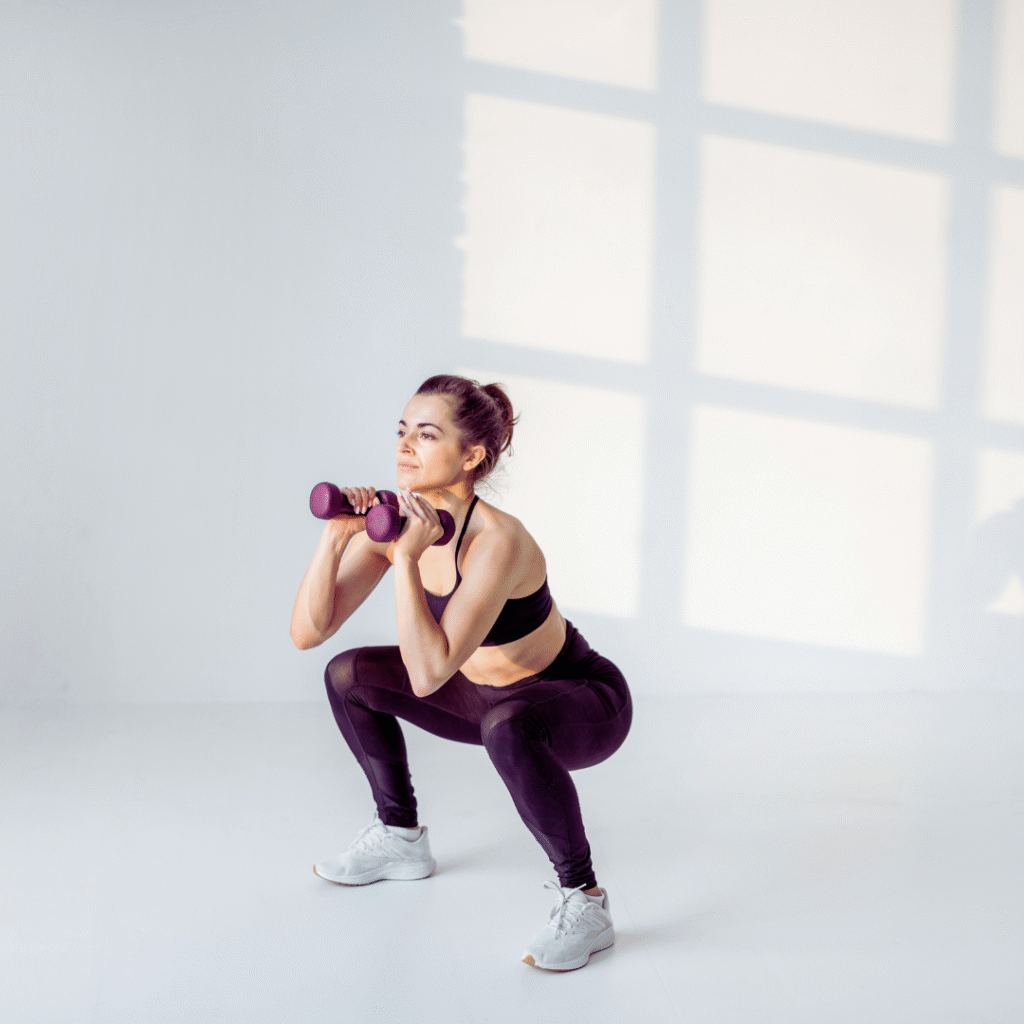
- Squats: Focus on the legs and glutes. Stand with feet shoulder-width apart, lower the body as if sitting in a chair, and return to standing.
- Planks: Strengthen the core. Hold a plank position on elbows and toes, keeping the body in a straight line for as long as possible.
Incorporating various bodyweight exercises improves overall strength and flexibility.
Resistance Training Movements
Resistance training is vital for building muscle mass and improving strength. Utilizing weights or resistance bands can provide effective workouts.
- Dumbbell Rows: Work the back and biceps. Bend forward with a dumbbell in each hand, pulling the weights toward the torso.
- Deadlifts: Engage multiple muscle groups, including the back, legs, and core. Stand with feet hip-width apart, hinge at the hips, and lift the weight from the ground.
- Overhead Press: Strengthen shoulders and arms. Begin with dumbbells at shoulder height and press upward until arms are fully extended.
Incorporating these movements can lead to noticeable increases in strength and endurance.
Compound Strength Routines
Compound exercises engage multiple muscle groups and are efficient for building functional strength. These movements are time-effective and enhance overall fitness.
- Barbell Squats: A full-body exercise that primarily works on the lower body. Load the barbell on the shoulders and perform a squat.
- Bench Press: Target the chest, shoulders, and triceps. Lying on a bench, lower a weighted barbell to the chest and push it back up.
- Pull-Ups: Excellent for building upper body strength. Hang from a bar and pull the body upwards until the chin clears the bar.
Integrating compound routines fosters muscle coordination and strength development.
Endurance-Building Activities
Endurance-building activities enhance cardiovascular fitness and stamina. Engaging in these exercises can improve daily energy levels.
- Running: A straightforward way to build endurance. Aim for steady-state runs or interval training to boost cardiovascular performance.
- Cycling: An effective low-impact activity that strengthens the lower body while improving aerobic capacity.
- Swimming: A full-body workout that builds endurance and strength without stressing the joints.
Practicing endurance activities promotes increased stamina, enhancing everyday physical activity.
Targeted Muscle Groups for Functional Strength
Targeting specific muscle groups is crucial for building functional strength in everyday activities. Focused exercises enhance performance and support injury prevention, allowing for improved movement patterns and better overall strength.
Lower Back Support
Strengthening the lower back is essential for posture and everyday stability. Effective exercises include deadlifts, good mornings, and back extensions, which specifically target the erector spinae and surrounding muscles.
Incorporating variations like single-leg deadlifts can also activate the core and glutes, increasing stability during lifts. This engagement not only supports the spine during movement but also aids in preventing injuries. Proper form and technique during these exercises are vital to maximizing benefits and reducing risks.
Glute Development
Glute strength plays a significant role in functional fitness. The glutes, consisting of the gluteus maximus, medius, and minimus, contribute to movements like squatting, running, and jumping. Effective exercises for glute development include squats, lunges, and hip thrusts.
Incorporating resistance bands can enhance the detail of the workouts by increasing muscle engagement. Engaging the glutes not only supports the lower back but also contributes to better athletic performance. Building muscle mass in this area aids in power generation and stability during various physical activities.
Core Stability Movements
A strong core is the foundation for functional strength. Core stability movements like planks, Russian twists, and bird dogs engage the abdominal muscles, obliques, and lower back. These exercises improve balance and overall stability.
Focusing on dynamic movements, such as medicine ball slams or stability ball rollouts, can further enhance the core’s strength. A robust core complements lower back and glute training by providing a solid support base, essential for efficient movement in daily life. Prioritizing core stability fosters a well-rounded approach to functional strength.
Safe Practice and Maximizing Results
Focusing on safe practice and effective techniques ensures fitness exercises contribute positively to strength and overall quality of life. Adhering to proper form, injury prevention strategies, and setting realistic weight goals can enhance results significantly.
Proper Form and Technique
Using proper form is essential in any exercise routine. Maintaining correct posture helps target the intended muscles and prevents injury. For instance, during squats, the back should remain straight, and the knees should not extend over the toes.
Repetition counts matter. Each movement should be executed deliberately, with full focus on the task at hand. This ensures greater muscle engagement and better results.
Consider recording workouts or seeking feedback from experienced trainers. This can help in identifying areas for improvement in technique, resulting in safer and more effective exercise sessions.
Balance and Injury Prevention
Balance plays a crucial role in fitness and injury prevention. Incorporating balance exercises, such as single-leg stands or stability ball workouts, can improve coordination and core strength.
Preventing injuries involves warming up effectively before workouts and cooling down afterward. Stretching can enhance flexibility and reduce muscle tension, contributing to better performance.
Listening to one’s body is vital. If an exercise causes pain or discomfort beyond normal exertion, it is important to stop and reassess. Consulting a healthcare provider or fitness professional can provide tailored advice to avoid injuries.
Setting Healthy Weight Goals
Setting realistic weight goals is fundamental to a sustainable fitness journey. Goals should be specific, measurable, attainable, relevant, and time-bound (SMART). For instance, aiming to lose 1-2 pounds per week is a healthy target.
Tracking progress can help maintain motivation. Keeping a journal or using fitness apps can provide insights into what works and what needs adjustment.
Importantly, a focus on quality over quantity is key. Building strength should not solely be about weight loss but also about increasing overall balance and well-being. This holistic approach fosters long-term changes that positively influence quality of life.
Structuring Your Fitness Routine
A well-structured fitness routine enhances daily strength and promotes overall well-being. Key components include understanding repetitions and adhering to physical activity recommendations.
Repetitions and Progression
Repetitions are crucial for building strength and endurance. They define how many times an exercise is performed in a set. A standard recommendation is to aim for 8-12 repetitions per set for strength training.
Progression is vital for continued improvement. Increasing weight, altering rest times, or changing the number of sets can effectively challenge the body. A common method is the 2 for 2 rule: if an individual can perform two additional repetitions comfortably for two consecutive workouts, they should increase the weight.
Using a progression chart can help track these changes. It’s essential to balance increases with proper form to prevent injury.
Physical Activity Recommendations
To maintain fitness, it’s advised to incorporate a mix of aerobic and strength exercises. The CDC recommends 150 minutes of moderate-intensity aerobic activity or 75 minutes of vigorous activity weekly.
Strength training should occur at least twice a week. This can include exercises like lifting weights, using resistance bands, or bodyweight movements such as push-ups and squats.
A sample weekly breakdown could look like this:
|
Day |
Activity |
|
Monday |
Strength training (full body) |
|
Tuesday |
30 minutes of brisk walking |
|
Wednesday |
Strength training (upper body) |
| Thursday |
30 minutes cycling |
| Friday |
Strength training (lower body) |
| Saturday |
30 minutes of swimming |
| Sunday |
Rest or light stretching |
Following these guidelines helps ensure a balanced and effective fitness routine.